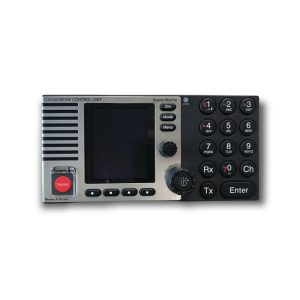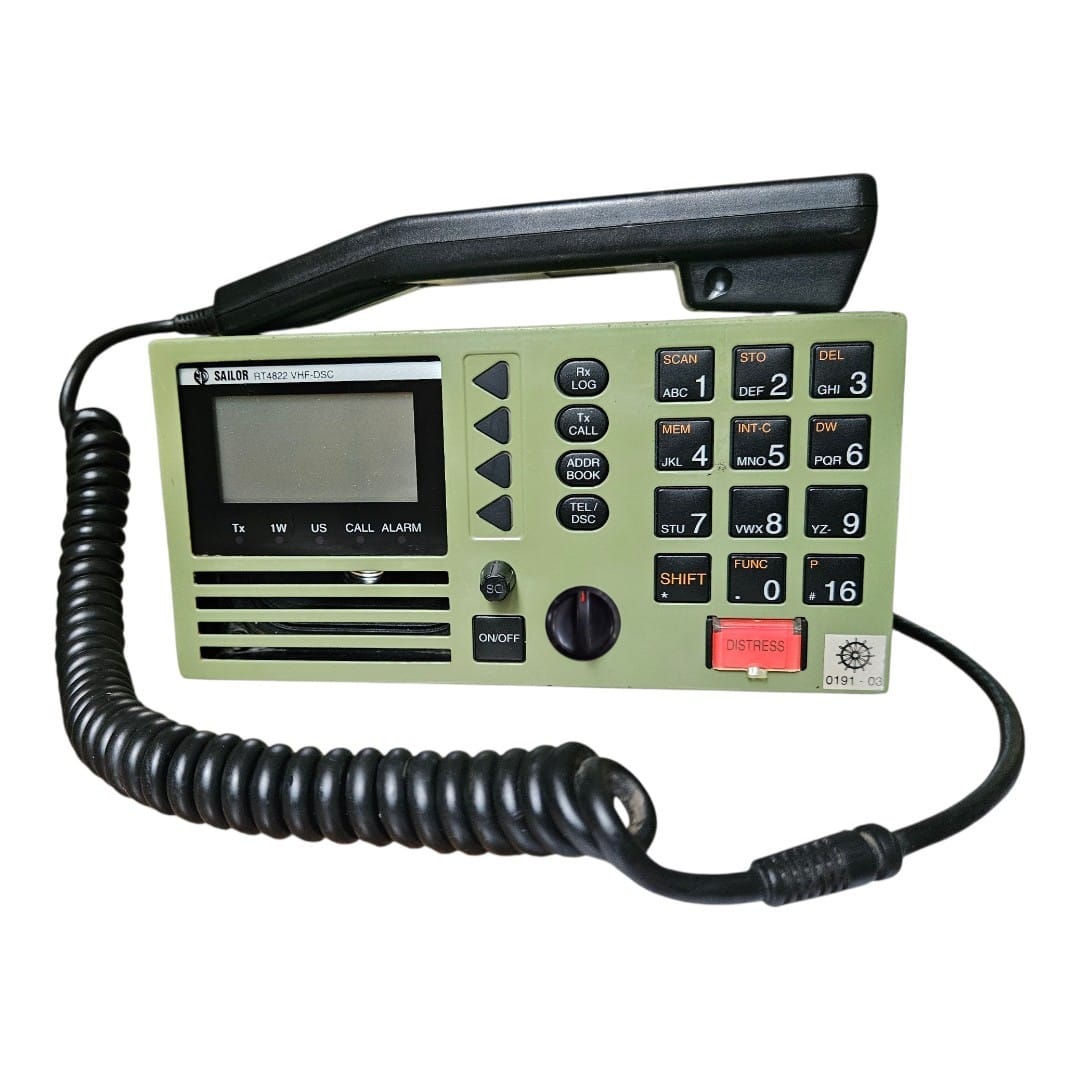
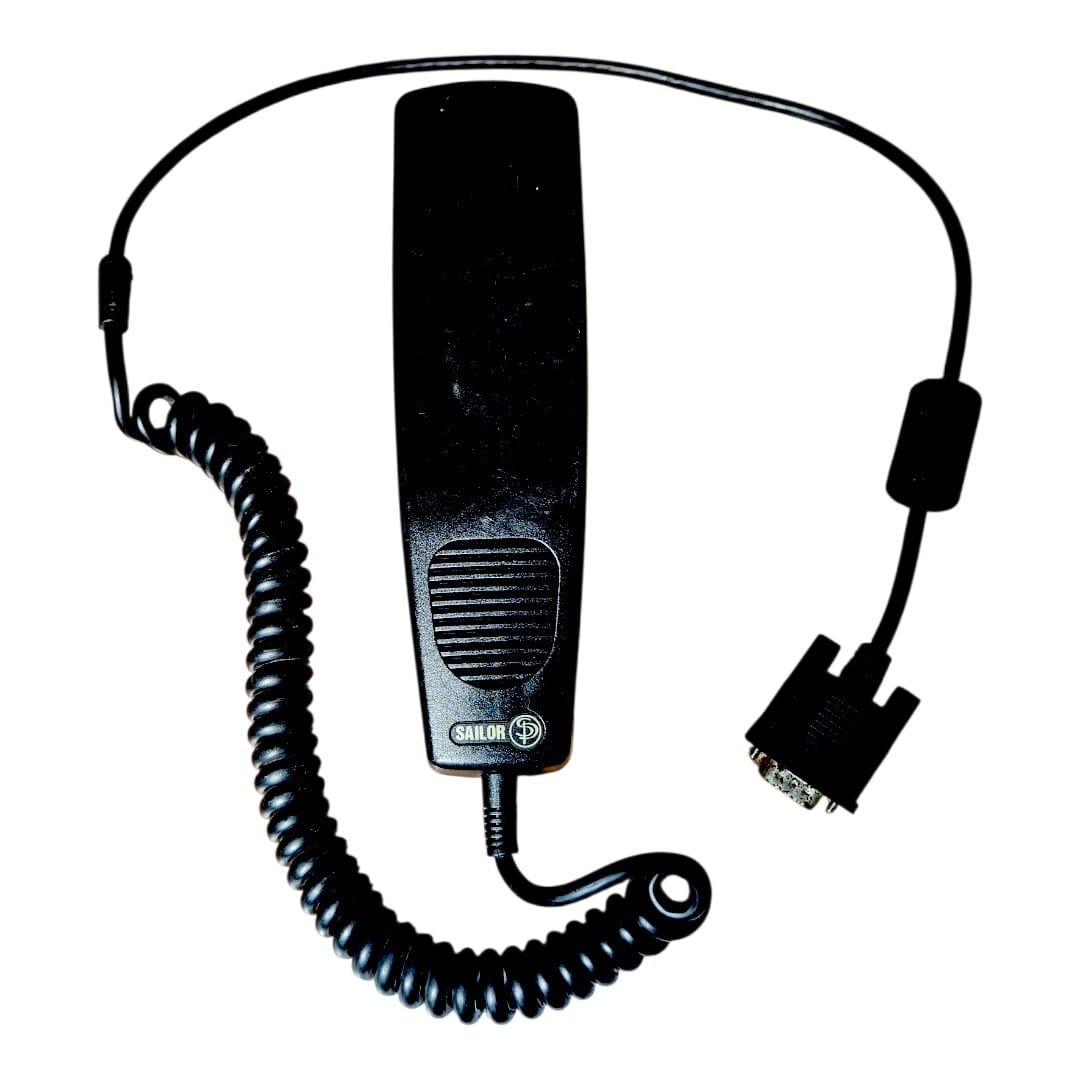
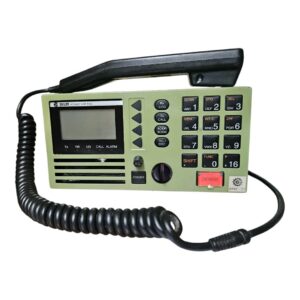
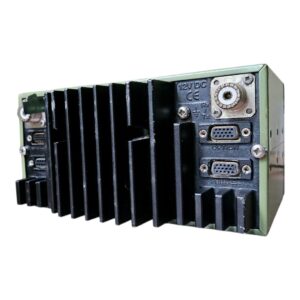
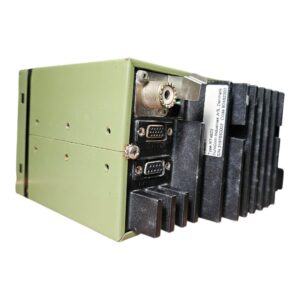
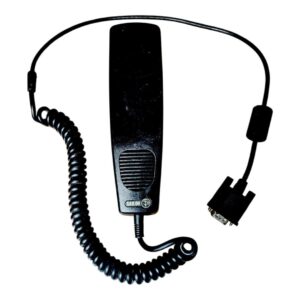

SAILOR RT4822 VHF-DSC ( Skanti 1000 )
The SAILOR RT4822 is a marine VHF radiotelephone with integrated DSC Class A, developed for SAILOR System 4000 GMDSS installations. The unit provides VHF voice communication, DSC signalling, NMEA 0183 navigation input, external loudspeaker connectivity and SPARC-Bus system integration.
The RT4822 operates in the 150.8–163.6 MHz marine VHF frequency range and supports simplex and semi-duplex operation. It provides up to 25 W RF output power in high-power mode and approximately 0.9 W in low-power mode.
Technical Specifications
| Parameter | Specification |
|---|---|
| Model | SAILOR RT4822 |
| Equipment Type | VHF / DSC Transceiver |
| DSC Class | Class A |
| Frequency Range | 150.8 – 163.6 MHz |
| Channel Spacing | 25 kHz |
| Optional Channel Spacing | 12.5 kHz |
| Standard Channels | International channels, 25 kHz |
| Private Channels | Up to 40 |
| Optional Channels | Up to 224, including up to 54 private channels |
| Operating Mode | Simplex / Semi-duplex |
| Telephony Modulation | G3EJN |
| DSC Modulation | G2B |
| Frequency Stability | ±10 ppm / optional ±5 ppm |
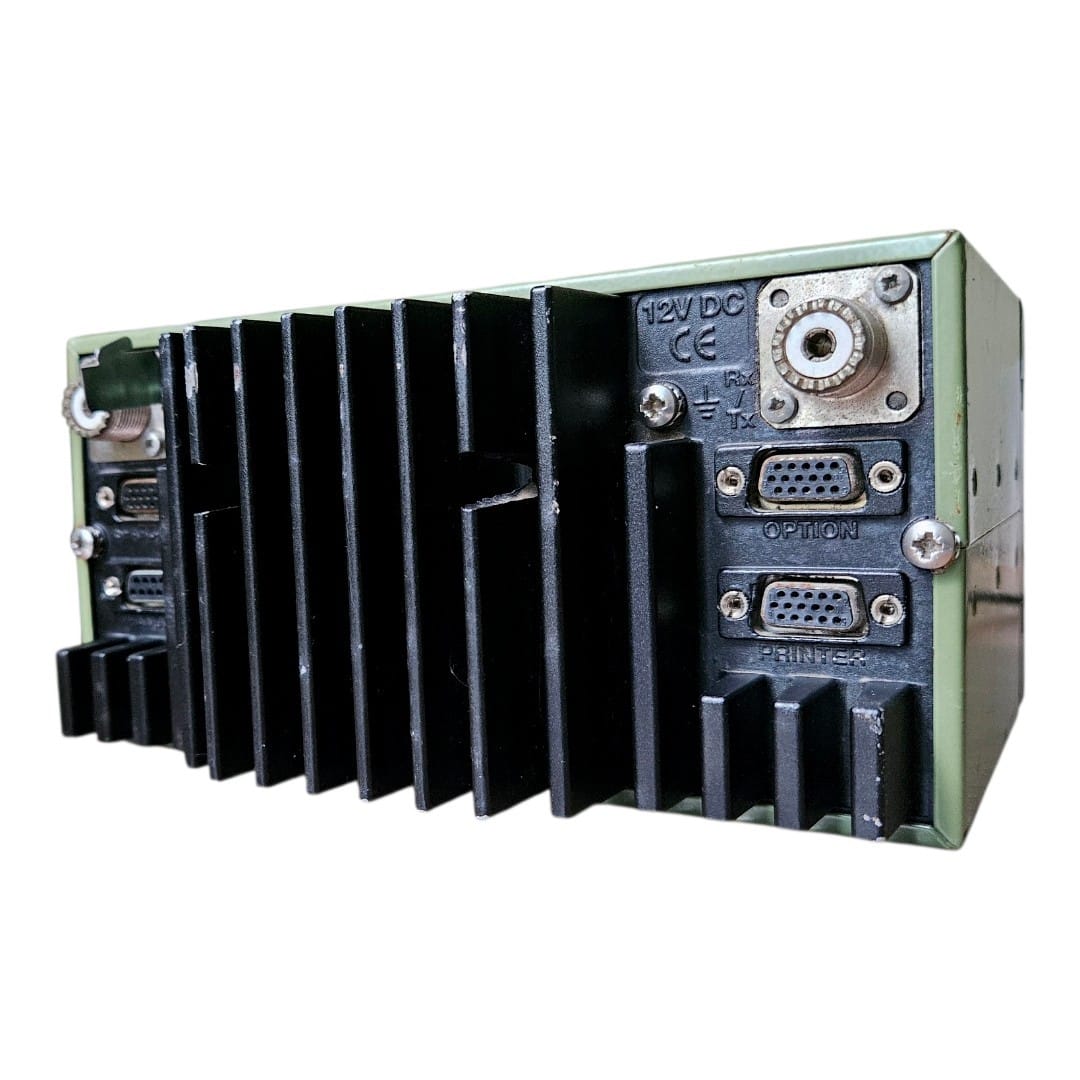
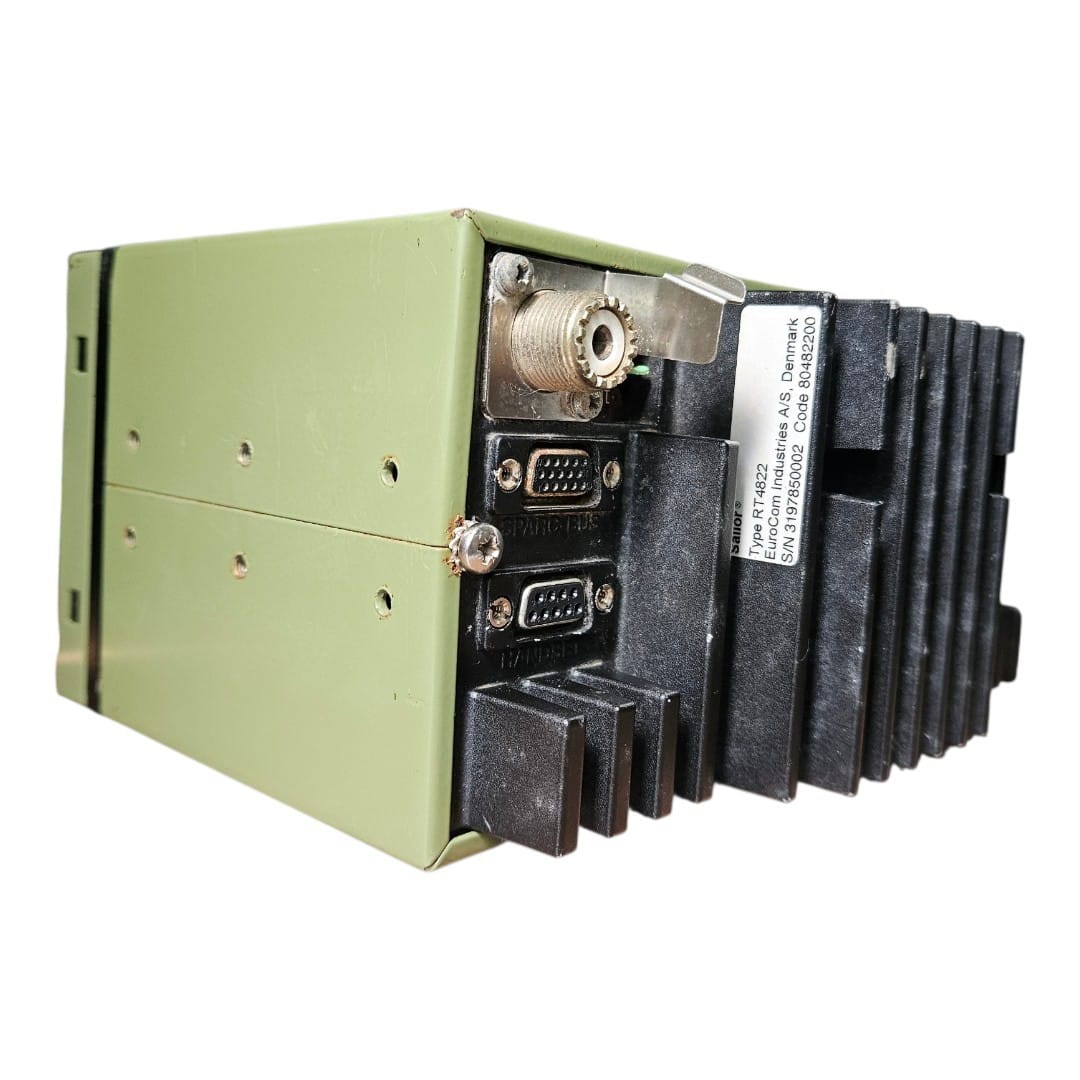
| Antenna Connector | 50 Ω female SO239 |
| Nominal Supply | 13.2 V DC |
| Supply Range | 10.8 – 15.6 V DC |
| Operating Temperature | -15°C to +55°C |
| Dimensions | 100 × 200 × 176 mm |
| Transceiver Weight | 2.5 kg |
The technical specification states compliance with applicable requirements and resolutions from ETSI, IEC, ITU and IMO, including ETS 300 162, ETS 300 338, IEC 945, IEC 1097-3 and IEC 1097-7.
Offered product is reconditioned & tested.
Transmitter
- High-power RF output: 25 W
- Low-power RF output: 0.9 W
- Adjacent-channel power: below -70 dBc
- Spurious radiation: below 0.25 µW
- Cabinet radiation: below 0.25 µW
- Distortion: below 5%
- Signal-to-noise ratio: better than 40 dB
- AF response: +6 dB/octave
Receiver
- Sensitivity: -119 dBm / 0.25 µV at 12 dB SINAD
- Audio output 1: 4 W / 4 Ω
- Audio output 2: 6 W / 4 Ω
- THD: below 5%
- Signal-to-noise ratio: better than 40 dB
- Spurious emission: below 2 nW
- Spurious response attenuation: more than 70 dB
- Intermodulation attenuation: more than 68 dB
- Co-channel rejection: better than -10 dB
- Adjacent-channel selectivity: more than 70 dB
- Blocking: more than 90 dBµV
DSC – Digital Selective Calling
The integrated DSC section operates according to ITU-R M.541-6 and ITU-R M.689-2 and uses the ITU-R M.493-7 Class A DSC protocol.
- DSC protocol: ITU-R M.493-7 Class A
- DSC modulation: 1700 Hz ±400 Hz
- Data rate: 1200 baud ±30 ppm
- Frequency error: below ±1 Hz
- Symbol error rate: below 1 × 10⁻² at -119 dBm / 0.25 µV
- Residual DSC modulation: below -26 dB
NMEA 0183 / GPS Interface
The RT4822 includes an NMEA 0183 navigator interface for connection to onboard navigation equipment.
Supported NMEA sentences:
- GGA
- GLL
- ZDA
GPS/NMEA input is available through the Options connector:
- Pin 4 – NMEA_IN+
- Pin 5 – NMEA_IN-
The manual also specifies connection through the supplied 15-pin high-density D-sub interface using the same NMEA input pins.
Power Supply
The standard RT4822 supply is 12 V DC.
For 24 V DC installations, the manual specifies the use of the SAILOR N420 external power supply, which converts 24 V DC to 13.2 V DC.
For AC operation, the SAILOR N163S is used together with the N420 for: 110 / 220 V AC
Current consumption specified in the installation manual:
- Standby: 0.14 A
- Transmit, low power: 1.5 A
- Transmit, high power: 5 A
The power connection uses a 10 A mini automotive fuse.
Antenna Connection
The RT4822 uses a 2 pcs standard 50 Ω female SO239 antenna connector.
The installation manual specifies:
- 50 Ω antenna system
- Maximum VSWR: 1.5
- Recommended low-loss coaxial cable: RG213U
- Antenna connector: PL259
For GMDSS Class A installations, the system uses separate antennas for the primary VHF transceiver and Channel 70 receiver. The primary transceiver antenna should be installed higher than the Channel 70 receiver antenna.
SPARC-Bus and System Connections
The RT4822 provides a SPARC-Bus interface for system interconnection and external control units.
Available system connections include:
- Handset
- SPARC-Bus
- External loudspeaker
- Printer
- NMEA/GPS
- DC power
- Antenna
Dimensions
The transceiver dimensions are:
100 × 200 × 176 mm (H × W × D)
The handset weight is approximately 0.4 kg.
Related Part Numbers
SAILOR RT4822 System Components
- RT4822 – VHF-DSC Transceiver
- MB4994 – Optional Mounting Bracket
- 80499410 – MB4994 Bracket Part Number
- N420 – 24 V DC to 13.2 V DC Power Supply
- N163S – AC Power Supply
- 56.114 – SPARC-Bus / Option Cable, 5 m
- 56.127 – VHF Printer Cable
Typical Replacement / Service Applications
The RT4822 can be used for:
- Replacement of an existing SAILOR RT4822 VHF-DSC
- GMDSS VHF-DSC system servicing
- VHF-DSC retrofit installations
- Replacement of defective transceiver units
- Spare equipment for SAILOR System 4000 installations
- Marine VHF communication and DSC system maintenance
Note: The exact contents of a supplied unit may vary depending on whether the item is supplied as the transceiver only or as a complete set with handset, mounting hardware and accessories.
 View / Download Product Operator Manual PDF
The detailed Operator manual for the Sailor RT-4822 VHF can be downloaded from the link.
View / Download Product Installation Manual PDF
The detailed Installation manual for the Sailor RT-4822 VHF can be downloaded from the link.