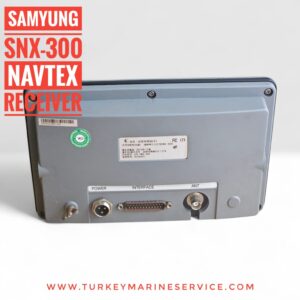

DEVICE: NAVTEX DISPLAY UNIT
BRAND: SAMYUNG
TYPE: SNX-300
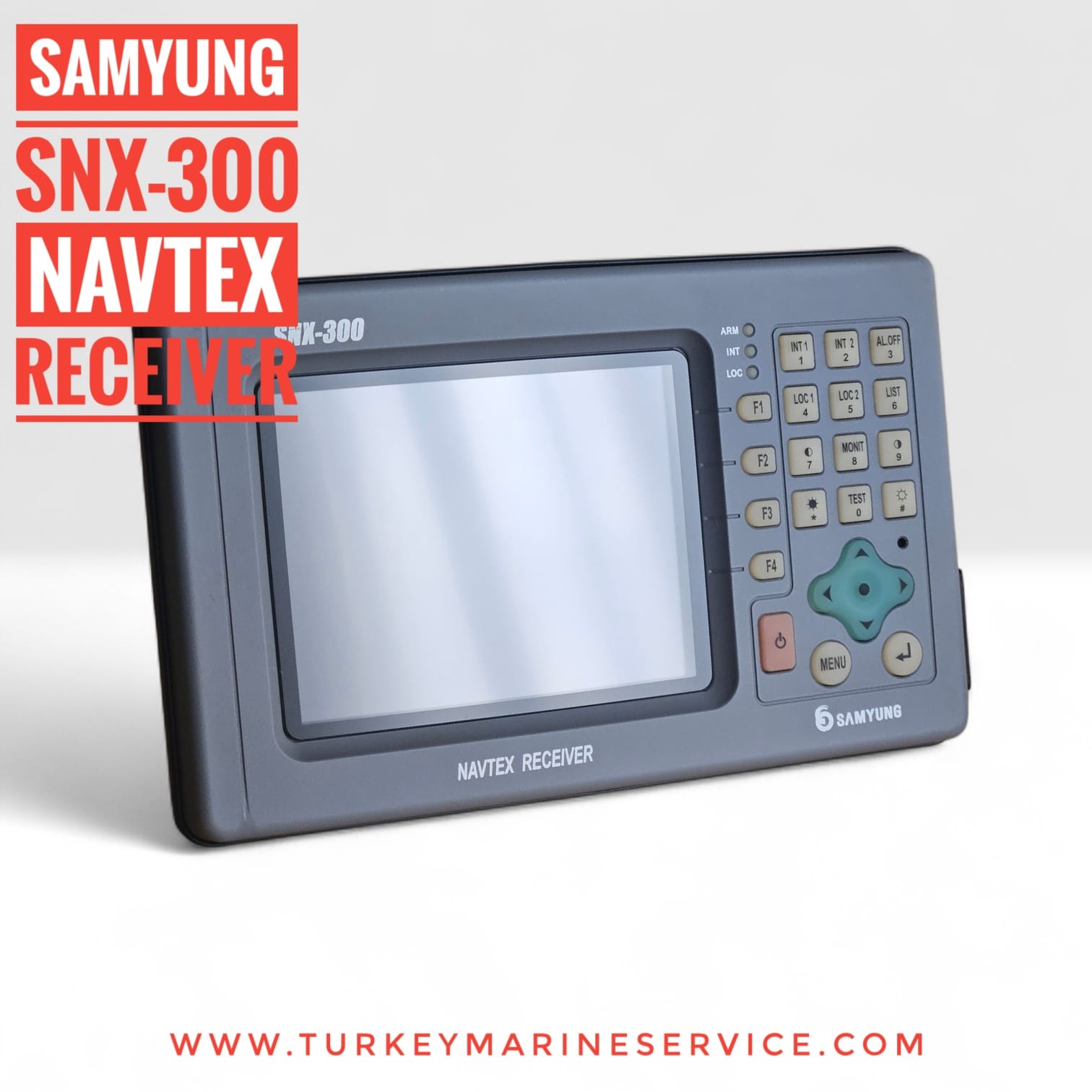
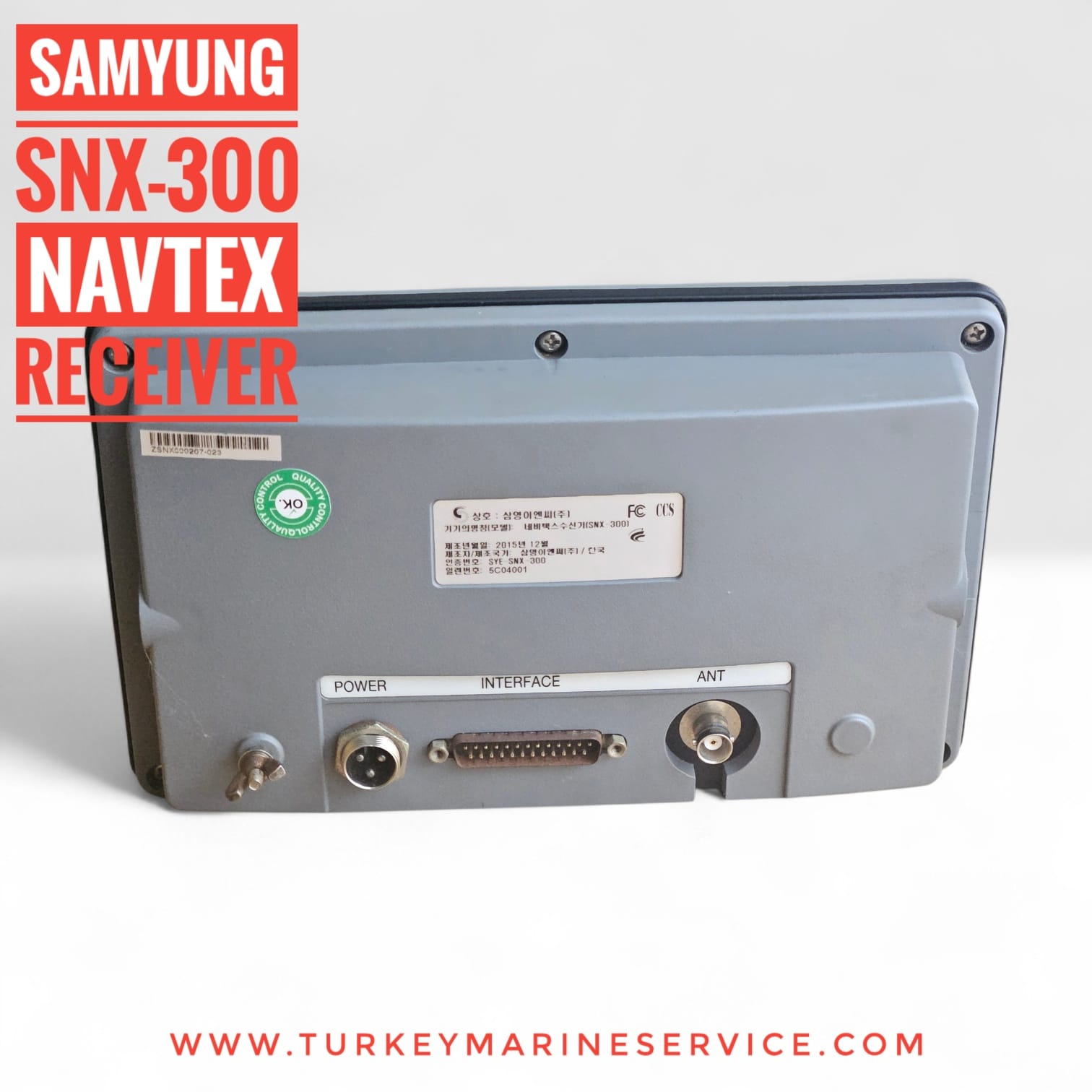
SAMYUNG SNX-300 NAVTEX Display Unit
The SAMYUNG SNX-300 NAVTEX Receiver is a reliable maritime safety communication device designed for continuous reception of NAVTEX broadcasts. Operating on international and national NAVTEX frequencies, the SNX-300 ensures timely delivery of navigational warnings, meteorological forecasts, and safety information essential for SOLAS-compliant vessels.
We offer global supply services and comprehensive support at all Turkish ports. Feel free to contact us anytime.
Features
- Multi-frequency NAVTEX reception (518 kHz, 490 kHz, 4209.5 kHz)
- Clear and durable 5.7-inch LCD display
- Low power consumption, suitable for 12V / 24V DC systems
- Compatible with SAMYUNG SAN-300 active NAVTEX antenna
- Designed in compliance with IEC 60945 marine standards
Receiver Specifications
- Receiving Frequency: 518 kHz, 490 kHz, 4209.5 kHz
- Receiving Modulation: F1B (Narrow Band Direct Printing)
- Sensitivity: 2 μV e.m.f. (50 ohms), 4% error rate or less
- Antenna Input: 50 ohms (NAVTEX active antenna)
Display Section
- Display Type: 5.7-inch LCD
- Resolution: 320 × 240 dots
- Backlight: LCD and keyboard backlight
- Dimmer Control: 10-step adjustable (keyboard selectable)
- Contrast Control: 10-step adjustable (keyboard selectable)
Power Supply
- Input Voltage: DC 12 / 24 V (10–36 V range)
- Power Consumption: 10 W (at 24 V DC input)
- Active Antenna (SAN-300)
- Receiving Frequencies: 518 kHz, 490 kHz, 4209.5 kHz
- Consumption Current: 8 V DC, 10 mA (typical)
- Impedance: 50 ohms
Environmental Conditions
- Operating Temperature: -15°C to +55°C
- Storage Temperature: -25°C to +75°C
- Relative Humidity: Up to 95% at 40°C (non-condensing)
- Vibration Standard: IEC 60945
Applications
- Commercial vessels
- Fishing boats
- Cargo ships
- Offshore and coastal vessels
- SOLAS and non-SOLAS ships requiring NAVTEX reception
Service & Supply
- Worldwide supply available
- Authorized technical service across all Turkish ports
- Suitable for new installations and replacement of existing NAVTEX units